Non-VoIP Numbers Explained: Free vs Paid
Non-VoIP Numbers Explained: Free vs Paid
What a non-VoIP number is, how apps detect VoIP with line-type lookups, why free non-VoIP numbers fail, and how to get a real SIM number for SMS verification.
What is a non-VoIP number?
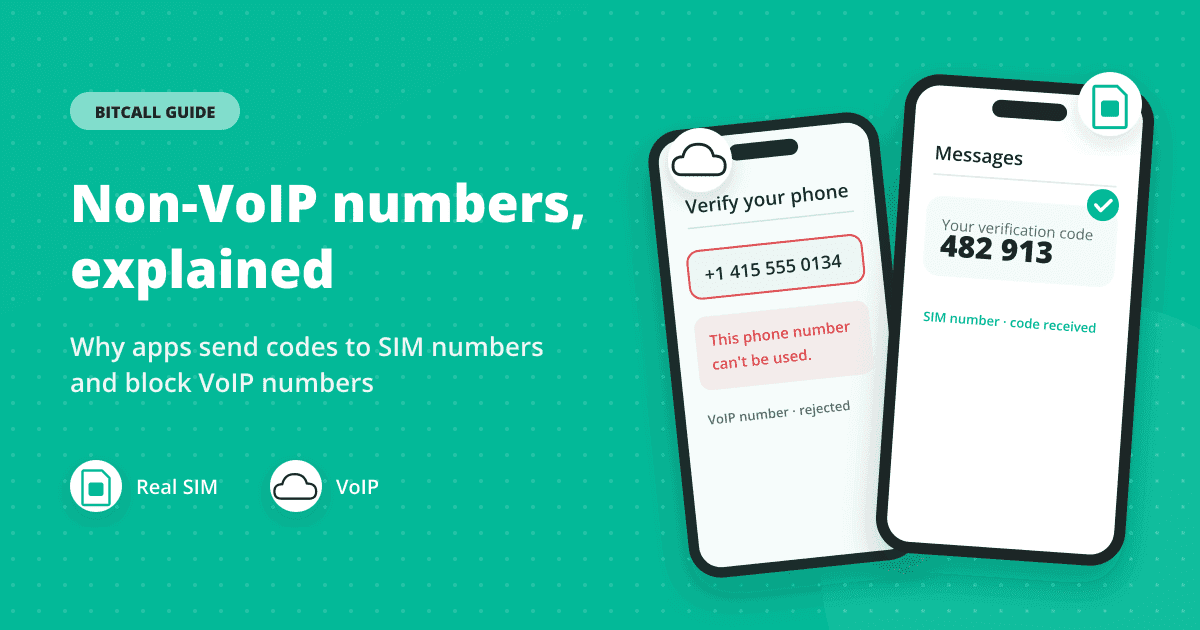
A non-VoIP number is a phone number issued by a mobile operator (or a traditional landline carrier) and tied to a real SIM or line. A VoIP number is issued by an internet calling service and works over a data connection, with no SIM behind it.
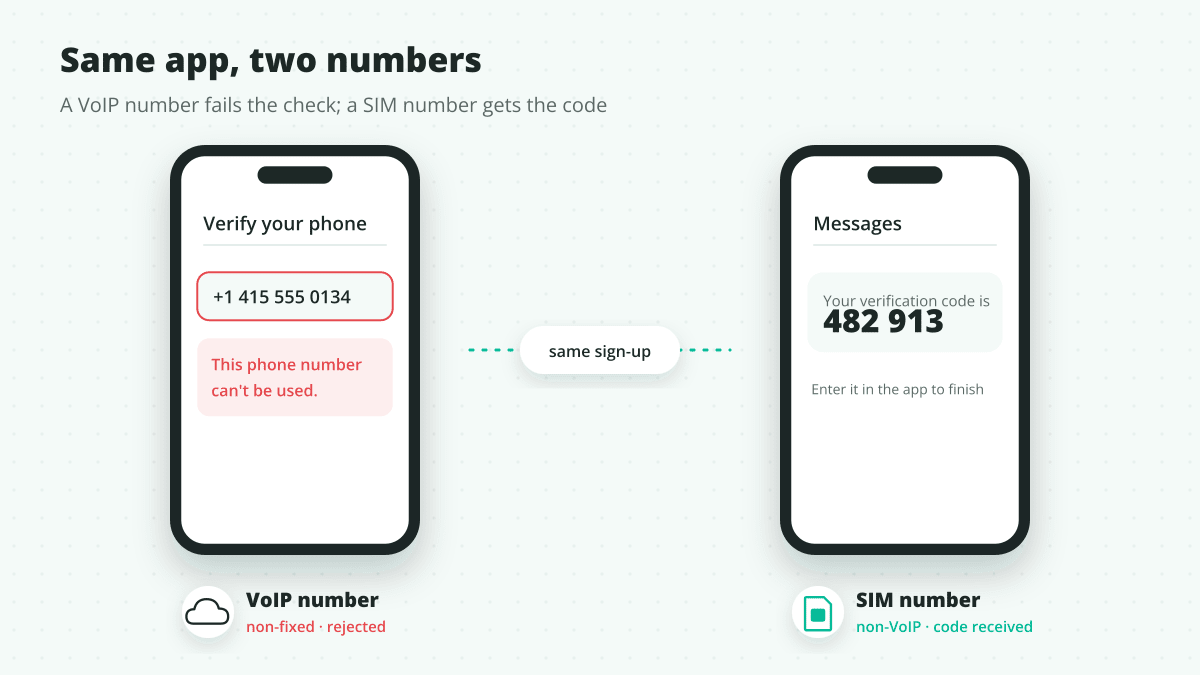
The difference matters because many apps and websites check what kind of number you enter before they send a verification code. A mobile number from a carrier's range usually passes that check. A VoIP number often doesn't, and the code never arrives.
VoIP numbers come in two kinds. Twilio, a major SMS and voice API provider, explains the difference: a fixed VoIP number requires a physical address, so it is generally tied to a specific user or company. A non-fixed VoIP number has no address requirement and is what you typically get from apps such as Google Voice.
How do apps tell VoIP and non-VoIP numbers apart?
Before sending a one-time code, a service can run a line-type lookup. The lookup checks which carrier holds the number and what kind of line it is, then returns a label.
Twilio's Lookup API, for example, returns one of these types: mobile, landline, fixedVoip, nonFixedVoip, personal, tollFree, premium, sharedCost, uan, voicemail, pager or unknown.
The service then applies its own rule. Common rules are "mobile numbers only" or "anything except non-fixed VoIP". The check runs in a fraction of a second, which is why a number can be refused before any SMS is sent.

Why do services reject VoIP numbers for verification?
The short answer is fake accounts. In Twilio's words, VoIP numbers "are often correlated with bots and don't have the same assurance that you're interacting with a real and unique user" (source).
- Cheap to create in bulk. Online numbers can be created by the hundred, so they make weak proof that one person is behind one account.
- Every code costs money. Services pay for each verification SMS, so they avoid sending codes to number types that are often abused.
- A mobile number is a stronger signal. A number on a carrier's mobile range is tied to a SIM, so platforms treat it as more trustworthy.
For you, the result looks like "This phone number can't be used", "Invalid number", or a code that simply never arrives.
Mobile vs fixed VoIP vs non-fixed VoIP
| Line type | Where it comes from | Typical result for SMS verification |
|---|---|---|
| Mobile (non-VoIP) | A carrier SIM or eSIM on a mobile number range | Usually accepted |
| Landline | A carrier's fixed telephone line | SMS usually fails; some services offer a voice call instead |
| Fixed VoIP | Business phone systems, registered to an address | Sometimes accepted |
| Non-fixed VoIP | App and online numbers such as Google Voice | Often rejected |
Are free non-VoIP numbers real?
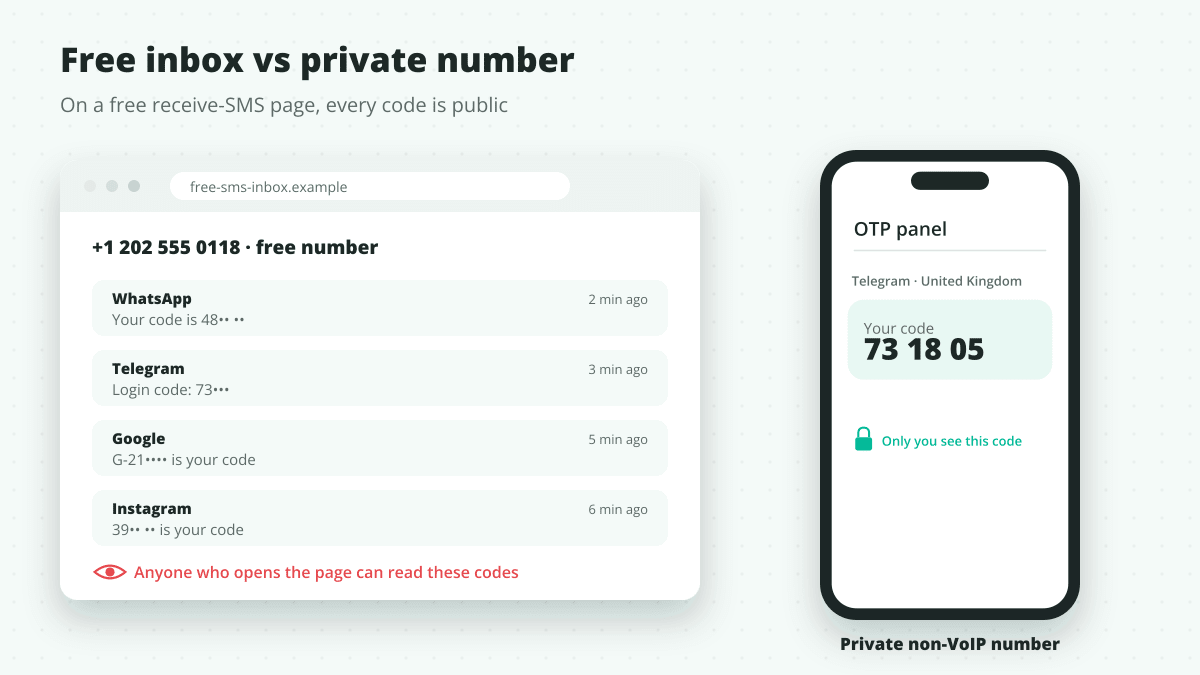
"Free non-VoIP number" is a popular search, and plenty of sites promise one. Most of them are public receive-SMS pages: one number is shared by everyone who opens the page, and every incoming message, including your code, is shown there for anyone to read.
- Shared and overused. The same number has already been used for the same app by many people, so the app limits or blocks it.
- Often VoIP anyway. Free numbers are frequently online numbers, which fail the line-type check above.
- Your code is public. Anyone watching the page can use it, which is a real risk for the account you are creating.
- Here today, gone tomorrow. Free numbers rotate, so you can't receive a second code later to log back in.
Some free-number sites now say it themselves: services actively block the VoIP numbers they offer, and they point users to paid, dedicated numbers instead.
How to check if a number is VoIP
- Run a line-type or carrier lookup. Developers can use an API such as Twilio Lookup; it returns the line types listed above.
- Run an HLR lookup for mobile numbers. An HLR lookup asks the mobile network whether the number is live and which network currently serves it, including after porting. A live result from a mobile network means a real SIM number.
- Watch the error message. If a service answers "number not supported" or "invalid number" for a number you know is active, it was most likely classed as VoIP or landline.
When a temporary non-VoIP number makes sense (and when it doesn't)
Good fits:
- A one-off signup where you don't want to share your personal number
- Testing your own app or service from another country
- Keeping work and personal accounts apart
Not a good fit: banking, or any account you will need to recover later. Phone numbers get reused: in the US, the FCC created the Reassigned Numbers Database precisely because disconnected numbers are handed to new customers. After signing up with a temporary number, add an email address or an authenticator app as your recovery method.
How to get a non-VoIP number for SMS verification
Bitcall's OTP numbers are real SIM-based numbers from 150+ countries, accepted by WhatsApp, Telegram, Google, Instagram and 500+ other services.
- Create a free account with just your email.
- Choose the country and the service you need, for example WhatsApp USA or Telegram UK.
- Pay from $0.10 by card, PayPal, Apple Pay, Google Pay or crypto.
- Enter the number in the app. Your code appears in your OTP panel.
- If the SMS doesn't arrive within 20 minutes, you get an automatic refund.
Service guides: virtual number for WhatsApp · virtual number for Telegram. Still comparing options? Read temporary phone numbers for verification: free vs paid.
FAQ
Is Google Voice a non-VoIP number?
No. Google Voice numbers are non-fixed VoIP numbers, the type that verification checks most often reject.
Is a non-VoIP number the same as a real SIM number?
In practice, yes. It sits on a carrier's mobile range and is served by a SIM on a mobile network.
Why didn't my code arrive on a free number?
Usually because the number is shared and already blocked by that app, or because it is a VoIP number that failed the line-type check.
Can I keep a temporary number for later logins?
Temporary numbers are meant for receiving a code once. For an account you plan to keep, use a number you control long term and add another recovery method.
Temporary Phone Number for Verification
How Much Does an eSIM Cost? Travel Data Prices in 199 Countries (2026)
Related posts
Temporary Phone Number for Verification
On This Page
What is a non-VoIP number?
How do apps tell VoIP and non-VoIP numbers apart?
Why do services reject VoIP numbers for verification?
Mobile vs fixed VoIP vs non-fixed VoIP
Are free non-VoIP numbers real?
How to check if a number is VoIP
When a temporary non-VoIP number makes sense (and when it doesn't)
How to get a non-VoIP number for SMS verification
FAQ